
Alexandre Bleuze
29th May 2026
Today, we have the pleasure of spotlighting Alexandre Bleuze in this interview about his activities at Framatome Intercontrôle and the use of CIVA software and other simulation in NDE services there.
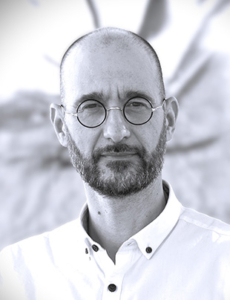
You are an engineer in the “studies” department of Framatome Intercontrôle. Could you describe the activities of this entity and your role within it?
Framatome Intercontrôle, ever since its creation in 1974 (as a joint venture between the CEA and Technip), has focused on the design and on-site implementation of automated inspection processes for nuclear components: initially for in-service inspections (France, Belgium, South Africa, etc.), but also for research and construction projects (ASTRID, RJH, ITER, EPR2, etc.). The in-service inspection machine (MIS) dedicated to the inspection of pressurized water reactor vessels (through television, ultrasound, and radiography) and the steam generator tube inspection system (Eddy Current testing) are the main activities for which Intercontrôle is known.
However, over the past fifty years, Intercontrôle has also carried out notable inspections in various other sectors, such as aerospace (inspections of the Ariane 5 rocket tanks) and civil engineering (inspection of the Panthéon’s vault)!
Since 2007, the Technical and Project Management department (DTP), to which I belong, has been developing and qualifying NDT processes for numerous activities, thus meeting the requirements of the main calls for tenders issued by the operator EDF for the on-site inspection market. Examples of projects include: control rod assembly mechanisms, reactor vessel through wall penetrations, RCV branch welds or Set-In branch welds, homogeneous and bimetallic welds of the main primary circuit, lap welds of the thermal sleeve areas of the pressurizer extension line, detection and characterization of stress corrosion cracks in RIS/RRA piping, internal vessel screws, bolting, etc. The DTP unit, based in Chalon-sur-Saône but also present in Cadarache, covers all the main NDT/NDE techniques: VT, ET, RT, TT, and UT. It is organized around the management and execution of industrial projects, R&D, and collaboration with units within the Framatome group or external to the group, such as Naval Group, Aubert&Duval, etc.
I joined Framatome Intercontrôle in 2008 (AREVA at the time) as a methods development engineer, specifically in UT, given my previous experience at Metalscan, a Tecnatom group company. As a side note, my first use of CIVA dates back to 2002-2003 (CIVA 6 version). Recognized as a Level I Framatome group expert since 2009, my role has always revolved around the execution of technical projects: process development, performance demonstrations, technical justification documentation, qualification, implementation, on-site training and expertise, proposal writing, etc. My extensive experience has been recognized, and my peers honored me by inviting me to join the Level II experts group in 2023. More recently, I became the technical lead for our volumetric control methods unit (UT) to guide junior colleagues in their work, ensure the success of developments, coordinate actions, and direct R&D as much as possible.
Your teams make extensive use of CIVA. Could you mention some recent projects for which Intercontrôle used CIVA simulations? What was the contribution of CIVA to these projects?
Yes, it’s true, CIVA is a platform we use very regularly, whether for numerical simulation or analysis, and across several areas: process evaluations during the offer development stage, feasibility tests during R&D programs, design of UT probes, parametric simulation programs for impact studies or technical justifications, development of processes criteria, definition of delay laws, etc. We can cite a few concrete examples where this software has provided crucial elements:
- Detection/characterization of SCC cracking in RIS/RRA piping project: CIVA was used (among other things) in the design phase of ultrasonic probes, in the development phase to justify the rating threshold and area coverage, or even in the on-site intervention phase to determine the origin of certain particular echoes obtained in TFM imaging (mode conversion phenomena).
- CPP weld inspection project: CIVA was used to address the impact of certain influential parameters and to express the sensitivity of the process in the flat bottom hole reference frame.
- For the EPR2 projects: CIVA made it possible to finalize the preliminary feasibility study of multi-element controls (evolution of the mono-element probe with focusing lens) and to determine the compromise allowing for the validity of all processes involved.
- For the inspection on complex geometry of the buttering of the counterbores of the cover adapters: CIVA assisted in the acoustic design of the probe which was successfully implemented.
Generally speaking, CIVA Simulation software is used to save time on certain design phases, reduce development costs, minimize the number of validation tests, and test potential improvements to control methods. In other respects, CIVA Analysis is a powerful and comprehensive tool enabling the rapid and reliable diagnosis of data acquired from our EddyFi equipment (Panther/Acquire).
What improvements or new features would you like to see in CIVA?
Excellent question… Users have shared a wealth of needs and ideas with me. Beyond resolving existing issues, here are a few that could be forwarded to the development team:
- Introduce Finite Element simulation for 3D cases of nozzles,
- Enable reading of the universal data format (.onde) with associated documentation.
- Integrate the convolution of experimental signals to define the reference signal to be injected into the simulations and improve simulation/experimentation convergence,
- Optimize the 2D CAD tool (integration of points via .csv files, possibility to perform the inspection from the side of an extended part by rotating around an axis, the axis of rotation being defined elsewhere), integration of a 3D CAD tool,
- Introduce custom PWI sequences settings without entering the Sequencing tab,
- Receive an alert when a filename is too long in a batch (no results despite 100% calculation),
- Write up a help section (F1) in French,
- Improve reference management: transducer, specimen, trajectory, etc.
- Complete the photon counting module in high-energy RT,
- Imagine a reverse engineering system based on the characteristics of targeted beams in complex configurations (refraction and skew angle), introduce an alert about the generation of grating lobes depending on the pitch,
- Design a tool to easily configure defect orientation in complex geometries: spheres, extruded 2D CAD, etc.
For some of these projects, you called upon the EXTENDE consulting team. What were the advantages of using our services?
Indeed, we have called upon the EXTENDE team on numerous occasions, and I believe this has been the case since 2012-2013. We have derived many benefits from this:
- The work is assigned in parallel with our development activities, which allows us to run the actions in parallel,
- EXTENDE’s expertise allows for the rapid identification of software limitations, the development of a workaround strategy, and the optimization of simulation models,
- The availability of significant computing power and the associated simulation processing routines, using CIVA script, makes it possible to complete complex and large simulation programs within very competitive timeframes,
- The team’s reactivity, dynamism, and conviviality are strengths that allow us to work efficiently and with confidence; moreover, in some cases, the close link with the CEA is a real asset.
Some of your colleagues recently attended the “Reliability in NDE” training course. What benefits did they gain from it?
We are committed to providing comprehensive skills development for the young engineers who have joined us in recent years, and also to updating the knowledge of our older colleagues on the new modules integrated into CIVA.
- The training provides an overview of the international normative context regarding technical justification in NDT and “data science”,
- They learned to select the analysis method according to the desired objective, as well as to define the method for assessing the level of confidence according to the volume of data and the analysis method,
- Overall, it has enabled an enrichment of knowledge and an opening necessary for the future preparation of qualification methods in the French nuclear field.
Finally, I would like to thank my colleagues for their help and support in answering the questions for this interview, in particular: Clara, Valentin, Rémi, Sylvain, Coralie, Anthony, Angela, Maeva, Olivier…