
Eddy Current Testing in CIVA Education
In CIVA Education ET, three types of computation are available: Field Computation, Probe Response, and Inspection Simulation.
Field Computation
Field Computation aims at generating charts of electric field, Eddy Current density, and magnetic field distribution. It can include:
- Planar (potentially multilayer) and Cylindrical component geometries
- Ferromagnetic or non-ferromagnetic materials
- Surface coil (air core, cylindrical, or C-Shaped ferrite core), bobbin coil configuration
- Various operating frequencies
Examples of simulations
The ET field computation module of CIVA Education can help you make visible what looks complex in this electromagnetic technique:
- Illustrate the Eddy Current penetration depth and illustrate how frequency and sensor size affect the actual penetration.
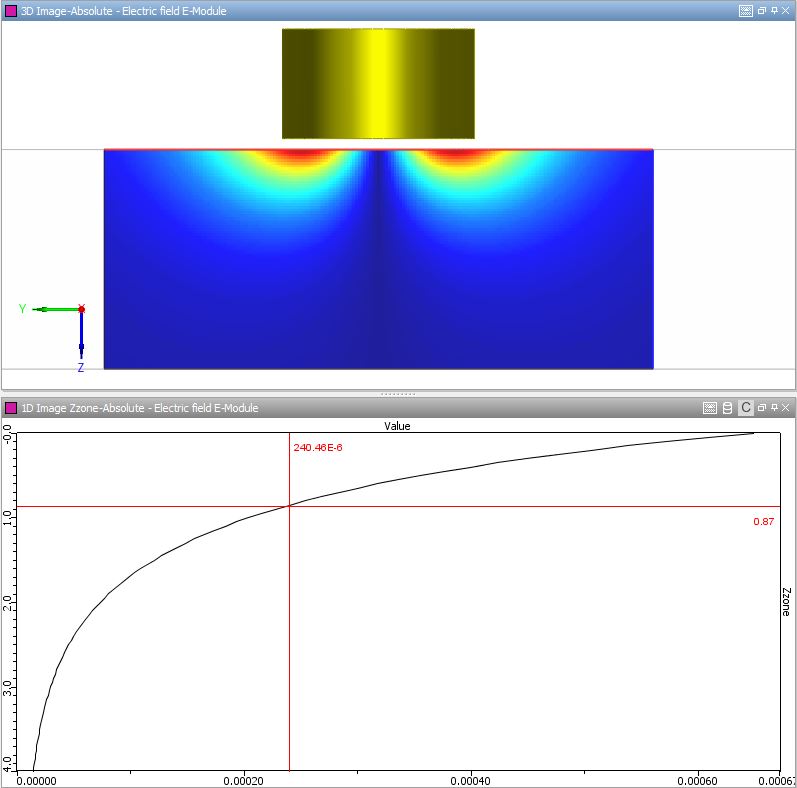
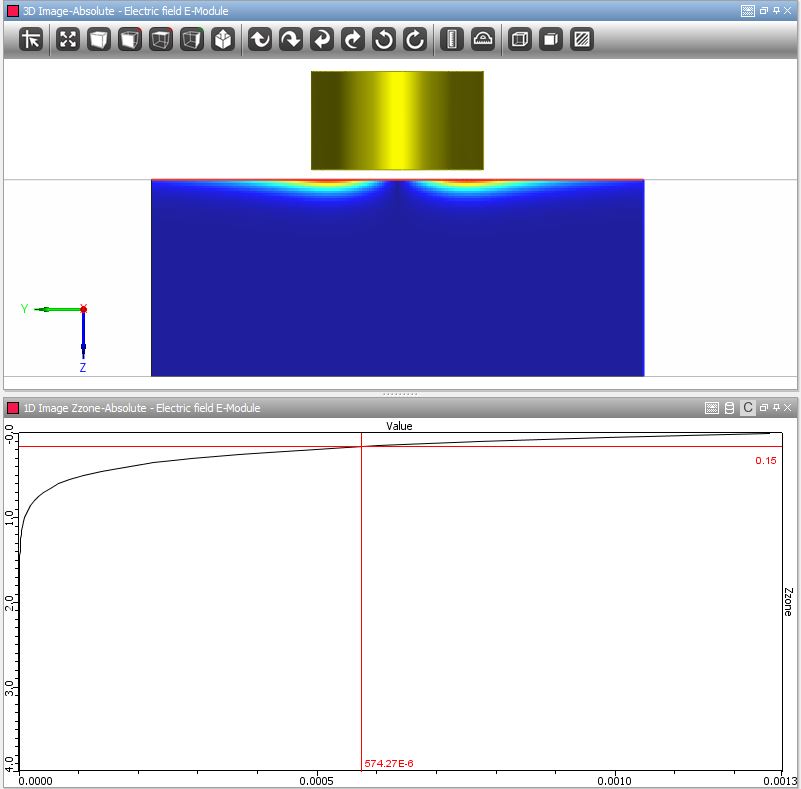
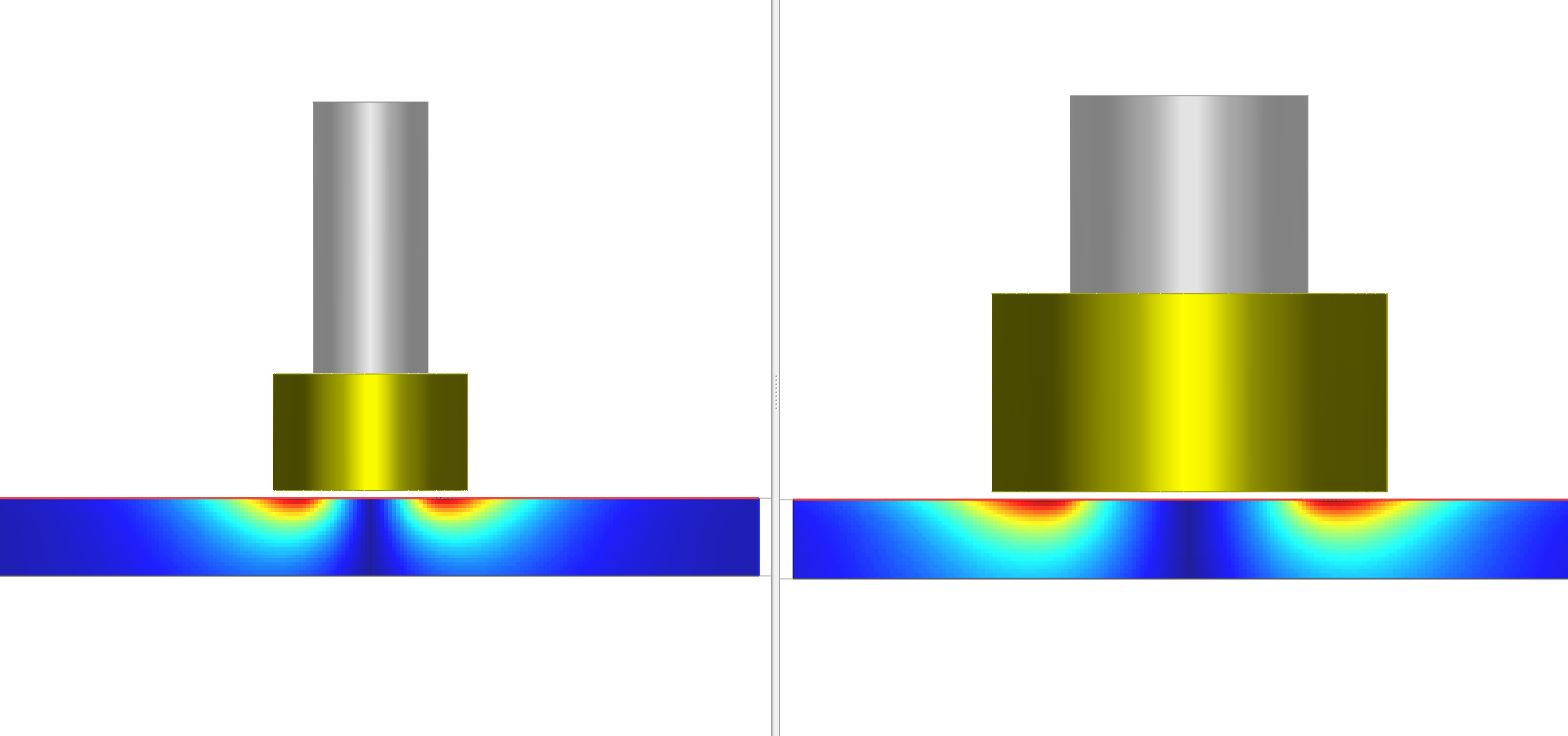
- Visualize the action zone of an ET sensor
- Observe Eddy Current distribution in a tube or a solid bar
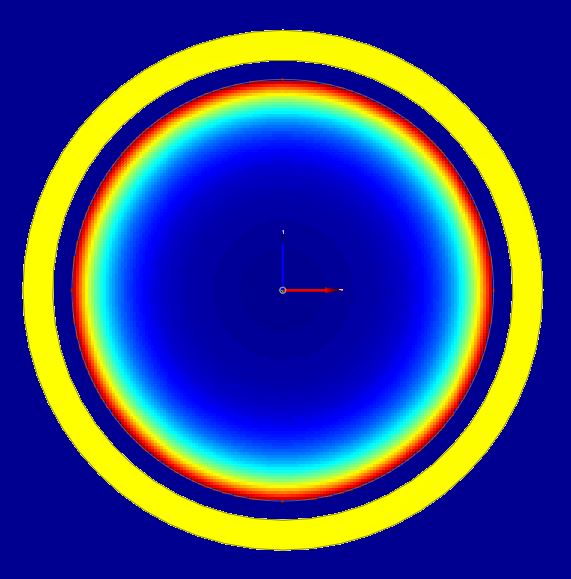
- Vizualize the influence of a ferrite core on the field induced by an ET sensor
- And many other ideas!
Probe Response
The probe response module helps you understand and interpret Impedance diagrams for various frequencies or for various lift-off values. Results can be displayed in reduced units (normalized) or in Ohms.
- Understand and interpret Impedance diagrams:
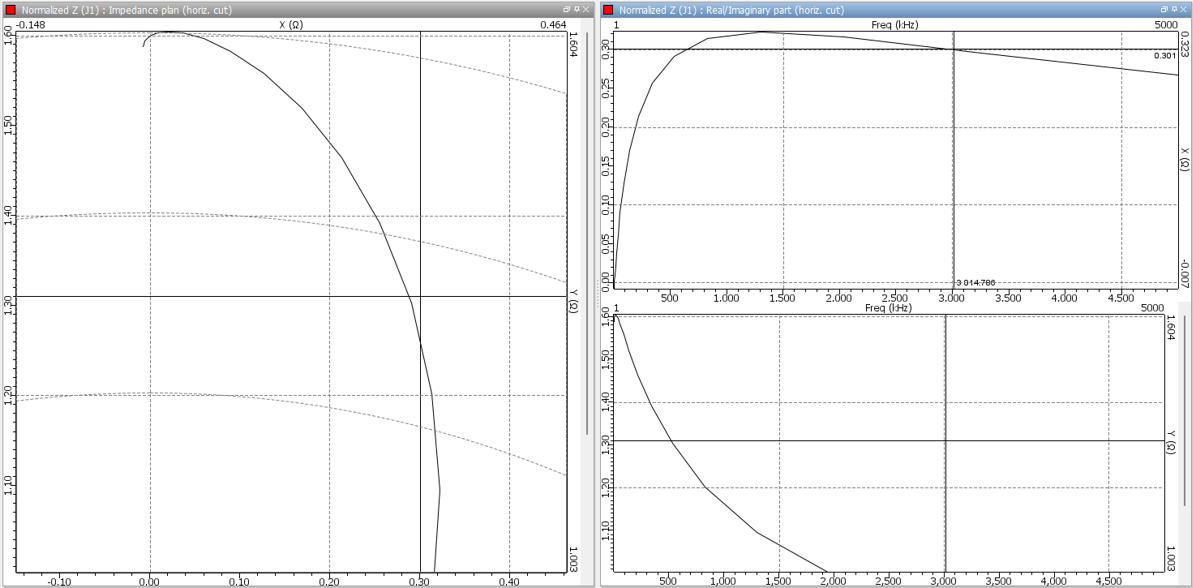
Normalized Impedance Diagram

Impedance Diagram in Ohms
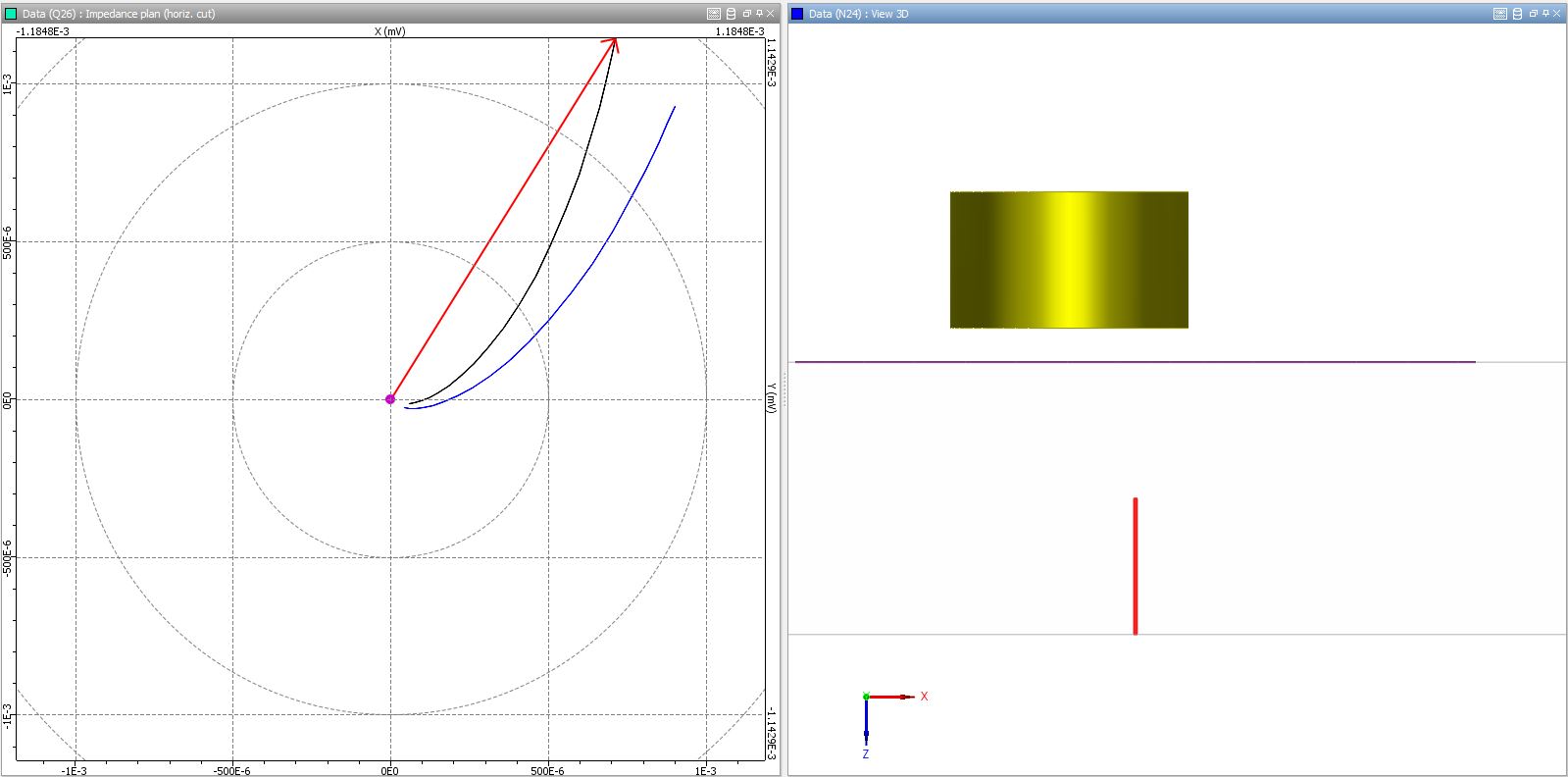
- Explain the lift-off signal and visualize the phase separation of lift-off and defect signal depending on the sensor and the operating frequency:
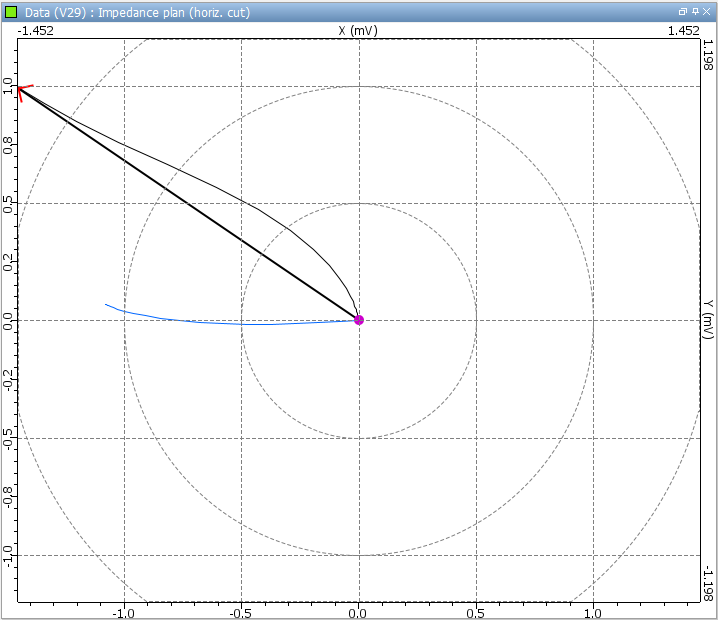
In black: Flaw signal; in blue: Lift-off signal
Inspection simulation
The features available in the ET inspection simulation module are:
- Planar and Cylindrical component geometries
- Conductive non-ferromagnetic materials
- Surface coil (air core or C-Shaped ferrite core), bobbin coil configuration
- Common or separated functions sensors
- Variable operational frequency
- Absolute or Differential mode
- Simulation of cylindrical hole or groove in tubes or rectangular notch in planar component
Examples of simulations
The ET inspection simulation module of CIVA Education can reproduce typical Eddy Current signals and help you explain the following concepts:
- Explain the main acquisition modes: separated or common functions, absolute or differential measurement
- Simulate classical tube inspection setup and explain the use of the phase angle for the defect characterization
- Illustrate signals obtained at the quadrature frequency for different defect depths in tube inspection
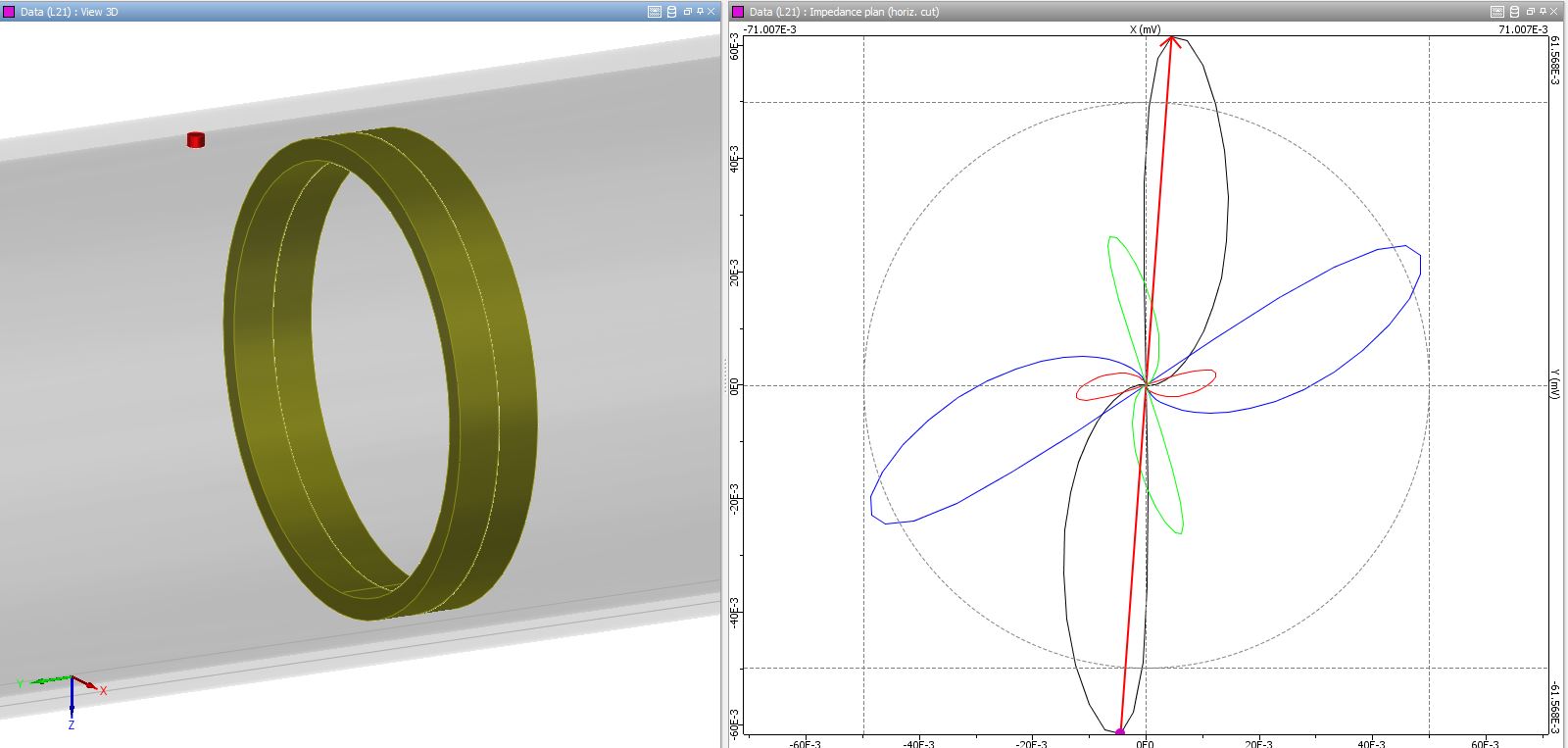
- Highlight the influence of the filling rate on the inspection sensitivity
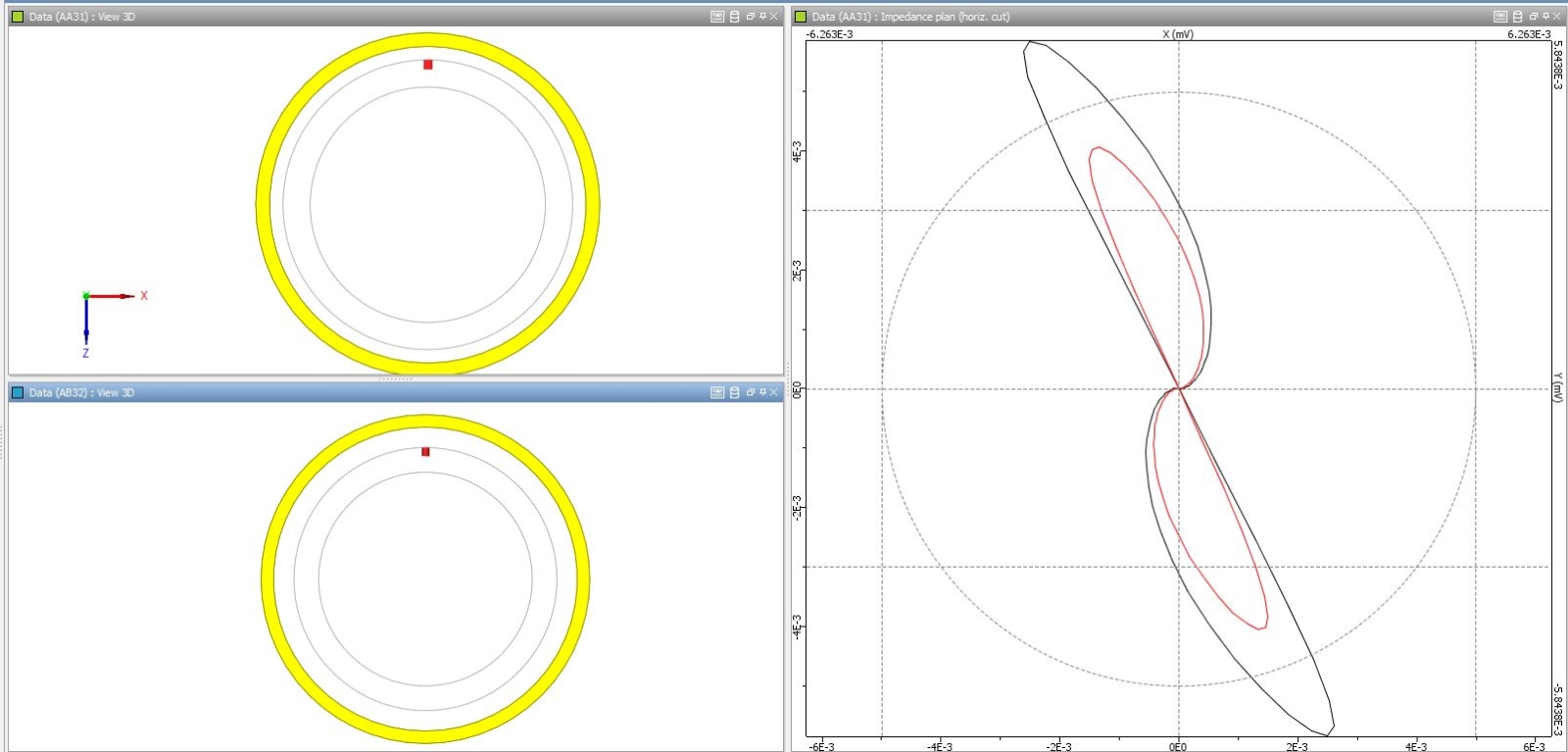
- Show the impact of the inspection speed on the signal resolution for a given operational frequency
- Illustrate the impact of the sensor size for a given flaw on the obtained response
- Evaluate the impact of the material conductivity on the signal obtained for a similar defect
- And many other possibilities to discover!