
Ultrasonic Testing in CIVA Education
In CIVA Education UT, two types of computation are available: Beam Computation and Inspection Simulation.
3D Beam Computation
The features of the UT beam computation module are:
- Planar and Cylindrical component geometries
- Isotropic or anisotropic materials
- Contact (with/without wedge) or Immersion testing
- Normal or Angle beam
- Conventional single element probes (circular or rectangular crystal) and linear PA (limited to 28 elements) probes
- Focused probe available (spherical or cylindrical shape)
- Point focusing or beam steering with delay laws (for PA probes)
- Accounts for longitudinal and transverse waves and mode conversions
- Several skips of the beam can be considered
Examples of simulations
In UT, among other possibilities, the beam module of CIVA Education can help you illustrate the following phenomena:
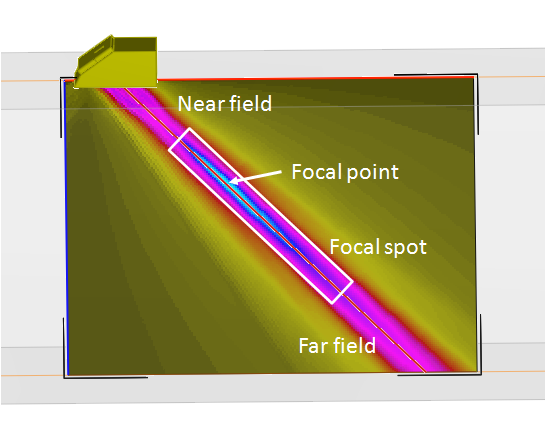
- Visualize and characterize the main parts of the beam for a given probe including the near field, far field, location of the maximum, focal spot size and beam coverage.
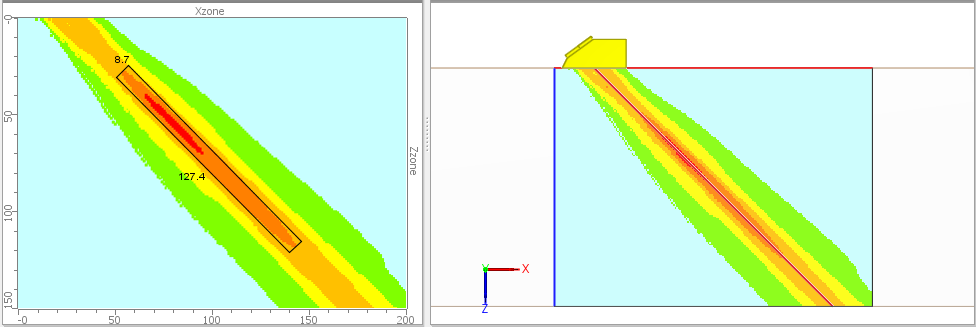
- Visualize the beam propagation, especially when specific phenomenon occur (propagation in an anisotropic material, grating lobe phenomena with a Phased-Array Probe).
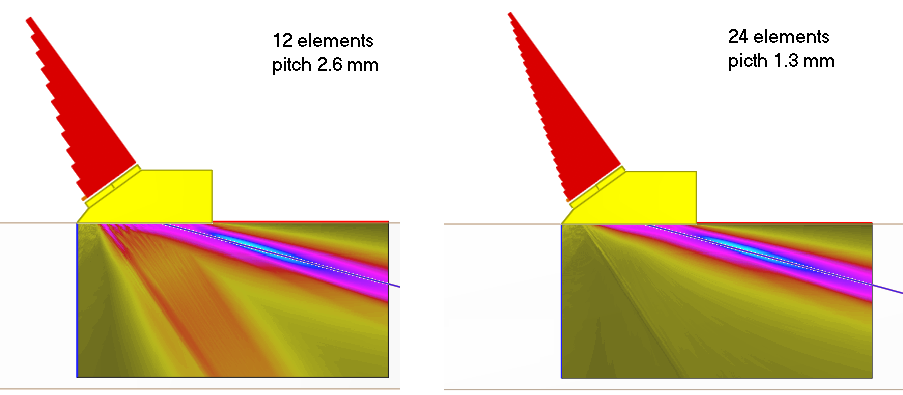
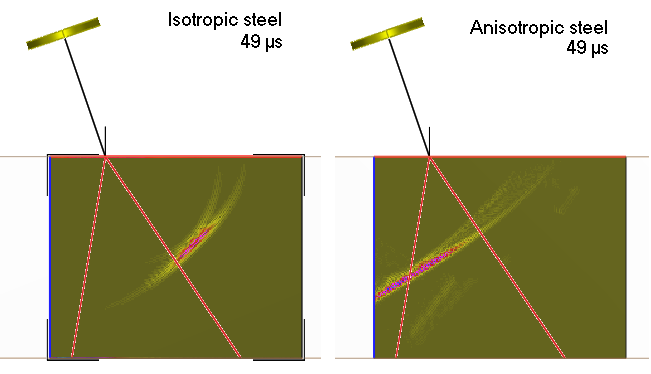
- Understand and see the effects of focusing or beam steering.
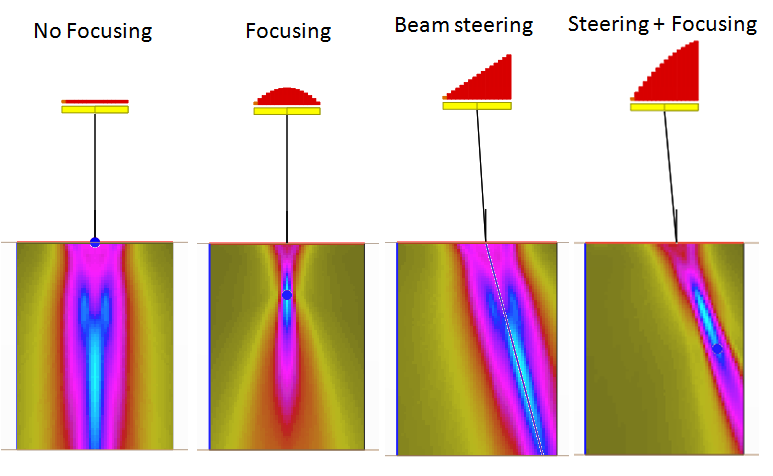
- See the impact of the material velocity on the beam angle.
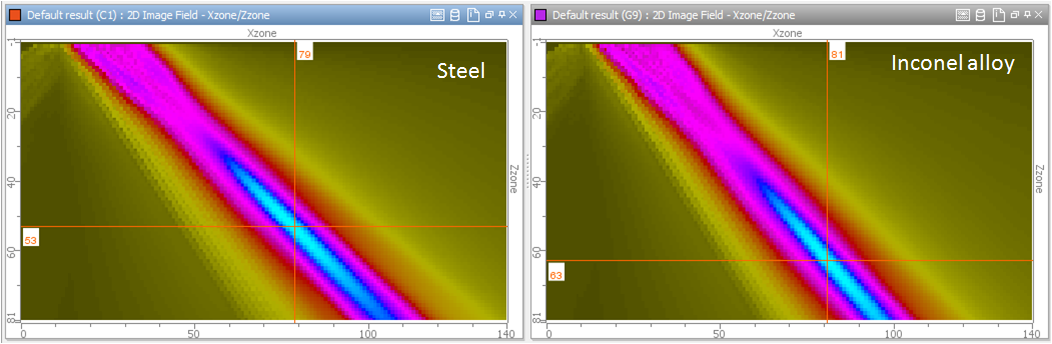
- Visualize the impact of physical parameters such as the probe frequency on the radiated beam.
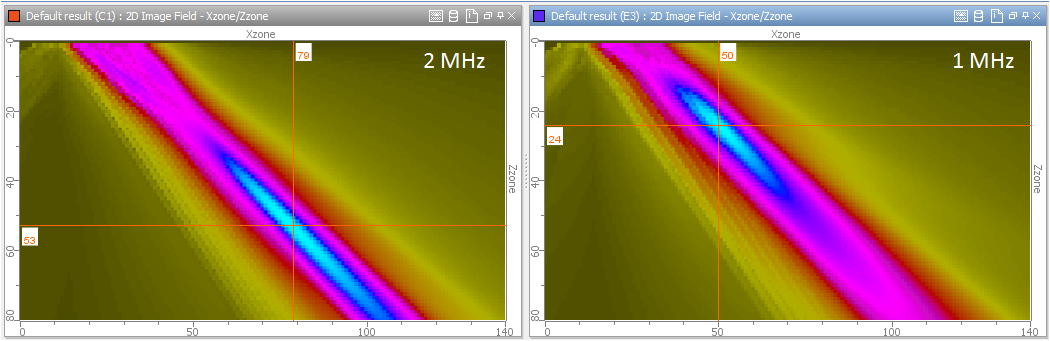
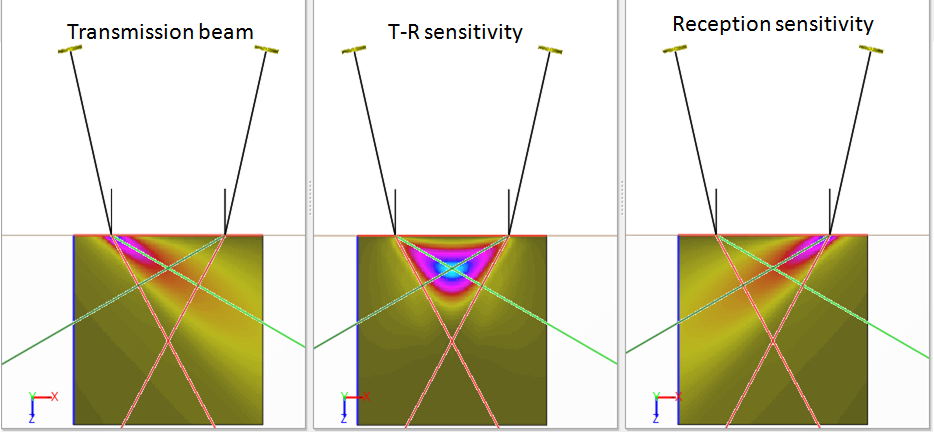
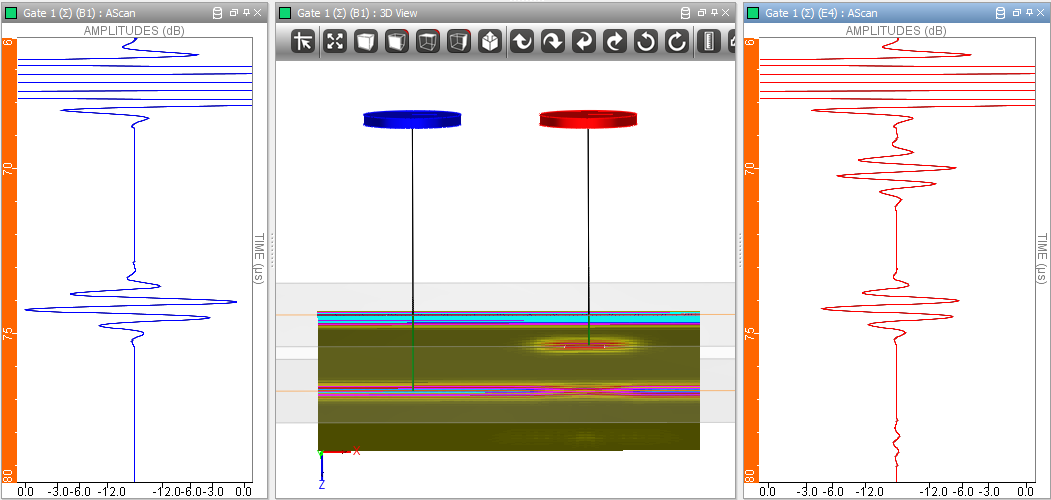
- Evaluate the sensitivity zone of a separate T/R probe (such as TOFD or Tandem) with the combination of the emitted beam and the zone of sensitivity in reception.
- And many other possibilities you can discover!
2D inspection simulation for qualitative and fast computations
The inspection simulation module includes the following capabilities:
- Planar and Cylindrical component geometries, weld with 30° V-Bevel
- Isotropic material
- Contact or Immersion testing
- Normal or Angle beam
- Conventional single element probes (circular or rectangular crystal) and linear PA (limited to 28 elements) probes
- Pulse Echo, TOFD, Tandem
- Phased-Array techniques: Point focusing, beam steering, sectorial scanning, TFM – Full Matrix Capture (PA Probes)
- Simulations with planar and SDH flaws with various dimensions, locations and orientations
- Accounts for L waves, T waves and mode conversions
Examples of simulations
In UT, among other possibilities and ideas, the inspection simulation module of CIVA Education can help you to illustrate the following points:
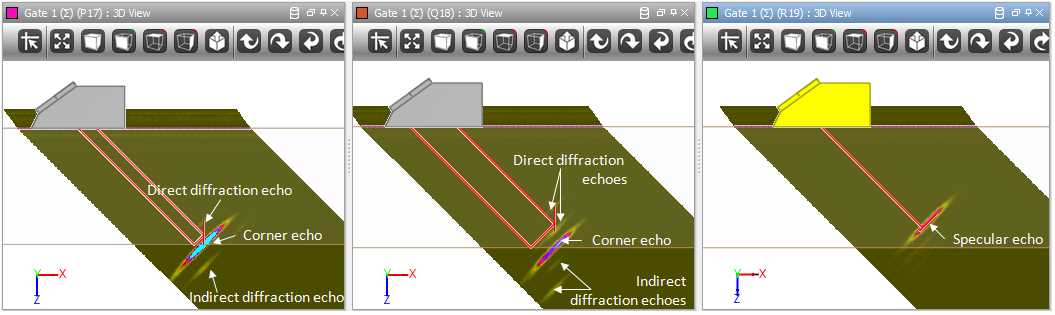
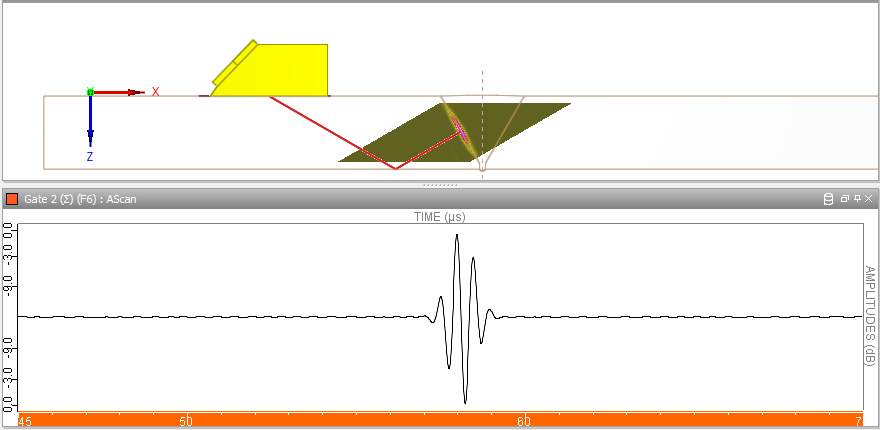
- The different types of echoes scattered by an indication or by the component boundaries (diffraction, reflection, corner effect, etc.).
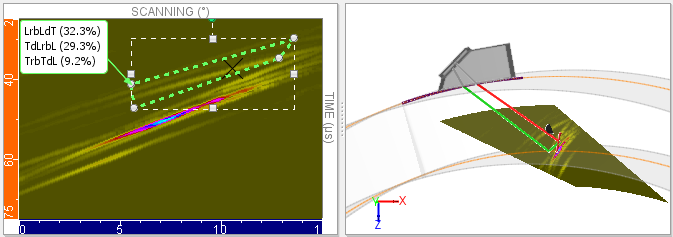
- Identify the different modes, including mode conversion phenomena.
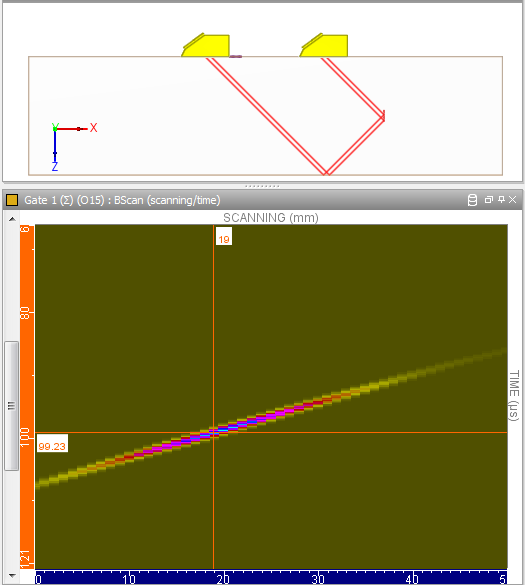
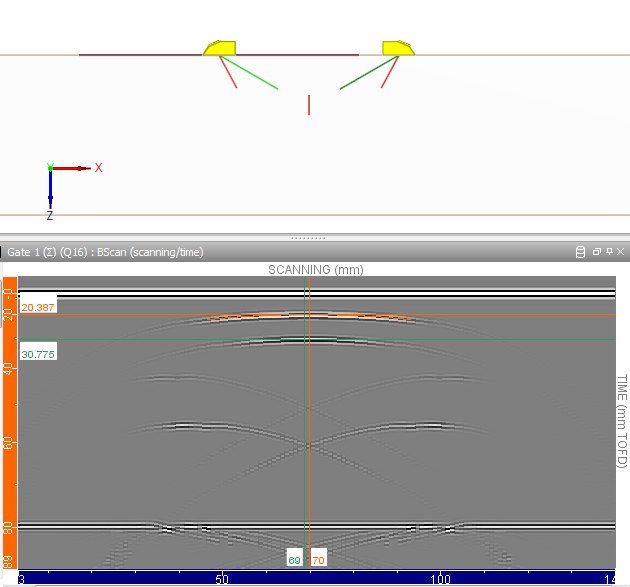
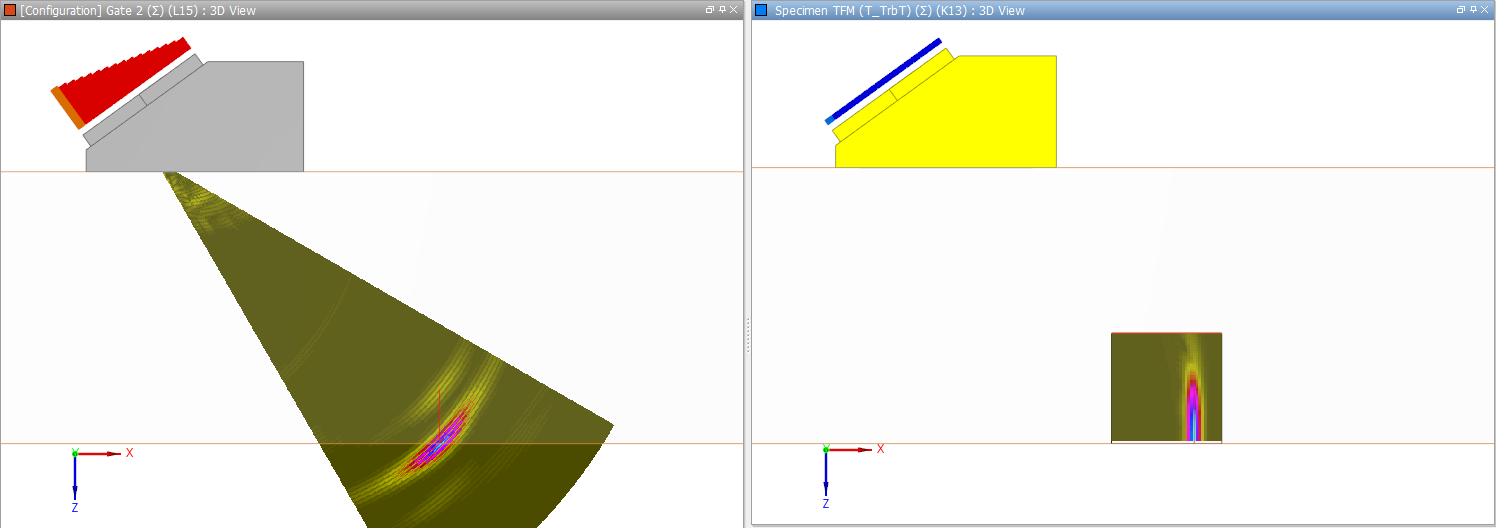
- Illustrate and compare the different UT techniques: Normal beam, Angled beam, TOFD, Tandem, PA S-Scan, PA TFM, etc.
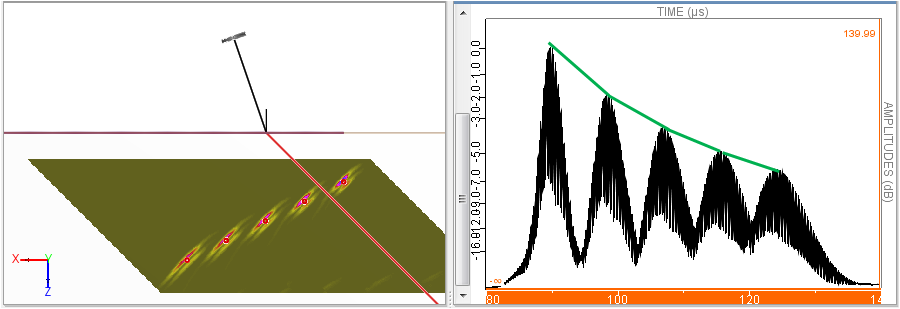
- Show calibration block set up to obtain DAC like curves.
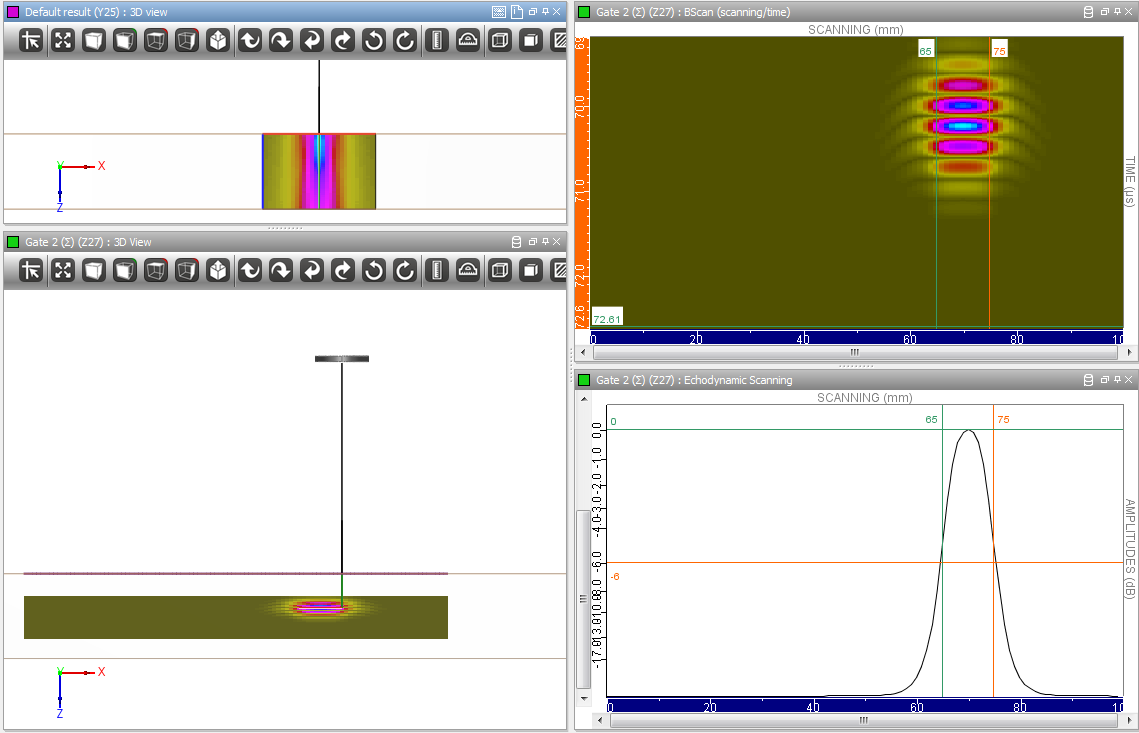
- Understand beam spot sizing technique such as the 6dB drop one and tip diffraction.
- Show the impact of influential parameters on the signal sensitivity (such as flaw location and orientation, or probe parameters…).
- And many other possibilities!