
François Billy
20th November 2025
Today, we have the honor of discussing with François Billy about the use of simulation in NDE and CIVA software at EDF DQI.
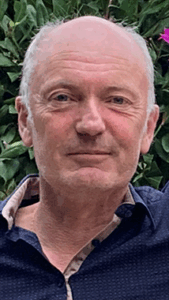
Could you describe the role of DQI within EDF, particularly in the field of NDT/NDE?
The DQI (“Direction Qualité Industrielle”, i.e. Industrial Quality Department) is the EDF entity that guarantees industrial quality by securing manufacturing, materials, and processes used for existing nuclear power plants and new construction projects.
In the field of NDT/NDE, we design, qualify, and monitor the Non-Destructive Evaluation procedures, drive their implementation by our contracted partners, and manage the contradictory expertise in factories or on site.
Could you tell us about your professional history and your current role at EDF DQI?
I joined EDF in 1989 to work on a management application intended for high voltage electrical equipment which was nearing its finalization.
Then, I joined the Studies and Research Management department, where I stayed for over 20 years. During those years, I worked on two main topics: the development of non-destructive testing techniques in the 1990s, and methods for evaluating the reliability of components in the 2000s. This last topic allowed me to get a first grasp of decision-making models under uncertainties and estimation of probability of rare events.
In late 2013, I joined an engineering entity, the CEIDRE (which since became “Direction Industrielle”, then more recently “Direction de la Qualité Industrielle”), to develop methods and tools around two big themes in NDE: qualification and monitoring. As the CEIDRE includes various activities, I also worked on the modeling of carbon segregation, which led me to exploit results of thermal/solidification and forging calculations in order to explain the high carbon values found in some components of nuclear power plants.
What role does simulation play in the activities of EDF, and what are the main tools used? How do you see the evolution of the use of simulation in NDT/NDE, and how EDF DQI use CIVA for its activities?
In the field of NDE, simulation is primarily used for qualification (in order to quantify the impact of influential parameters) and expertise (in order to understand and interpret a signal observed on-site). Looking at the physics of the phenomena is indeed necessary to explain an observation or, at least, to justify why a feared event (for example, the presence of a crack) could not lead to the measurement signal that was observed on-site.
Using simulation in technical justification dossier requires numerous parametric studies. In this regard, you have been able to make use of the recent metamodel tools available in CIVA. Do you think they constitute a relevant way of evolving the methodology for the study of influential parameters?
This approach seems very promising to me. Currently, we study the parameters one by one and then apply a cumulative law to quantity their impact in order to determine and qualify a detection threshold. This is a simple and pragmatic approach, but it is excessively penalizing. Moreover, its very restrictive hypotheses cannot be verified. I therefore recommend a comprehensive study of several parameters at the same time, which for some parameters involves reproducibility trials, and for others, simulation codes and the construction of metamodels. This approach is more accurate and does not require any particular hypotheses. We intend to promote it in the coming years to NDE stakeholders who develop and qualify procedures for implementation in EDF’s power plants.
You have several CIVA licenses within the different departments of EDF. How do you manage the use of these licenses in addition to the consulting offer provided by EXTENDE?
We conduct our own simulations. With that in mind, we offer training on simulation tools to new employees. We have extensively registered to training sessions offered by EXTENDE for UT and ET simulations over the last years. We are also developing an internal training program, focused on the specific components and issues of EDF.
Being able to rely on EXTENDE’s consulting is a valuable asset, either to validate our work, or to subcontract subcontract it when we feel we lack time or skills.
In your opinion, what should be the main perspectives of improvement and evolution of CIVA to support EDF’s activities?
For advanced NDE techniques, such as UT PWI/TFM, which enabled us to develop inspection processes for RIS/RRA circuits affected by stress corrosion, CIVA still shows too many limitations. And Finite Elements lead to prohibitively long calculation times. Significant gains in both in terms of time and of quality are needed, because if simulation does not accurately reproduce the underlying physics, it cannot be relied upon.
One possibility to test would be to use several simulation codes and attempt to build a metamodel with multi-fidelity methods (few calculations with a “costly” code combined with many calculations with a simplified code). This would allow for the construction of a metamodel at a reasonable cost.
Finally, in conclusion, I would like to point out that the ultrasonic sensor that enabled EDF to monitor its nuclear fleet and restart the power plants that had been preventively shut down at the beginning of 2022 was manufactured based on a simulation conducted by EXTENDE in two weeks in January 2022. In accordance with constraints related to size, energy, and performance, an optimum was defined using a simplified metamodel. The production of three sensor units was launched immediately afterwards, at the end of January. Given the urgency and the manufacturing deadlines, we ultimately launched the production of over a hundred sensors at the beginning of March, relying solely on this simulation work. And the performance lived up to expectations!